




The Waste Test – Can Luxembourg Change its Habits?
Luxembourg is quick to wear the badge of sustainability. The Grand Duchy, with its deep pockets and cosmopolitan outlook, often positions itself as a European leader in environmental responsibility. Yet beneath the green rhetoric lies a contradiction – one of the wealthiest countries on the continent is also among its most wasteful.
Per capita, Luxembourg produces more household waste than almost any other EU nation. High salaries, consumer-driven lifestyles and the lure of convenience have fueled a throwaway culture that jars with its eco-friendly branding. While official campaigns talk of recycling and circular economy principles, the sheer volume of rubbish tells another story.
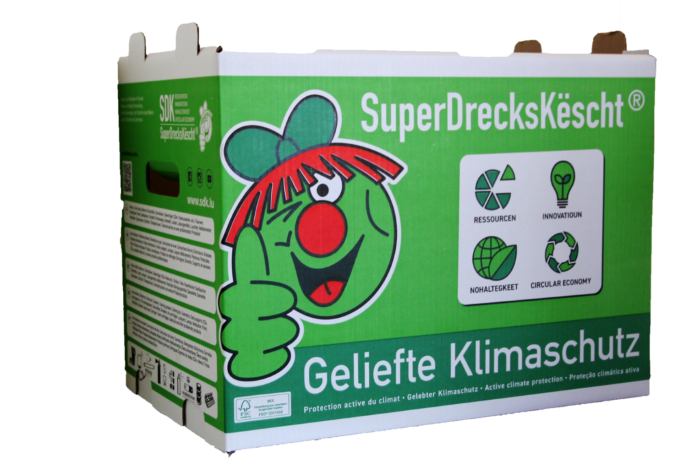
The state has not been idle. Successive governments have invested in advanced sorting plants, incineration with energy recovery, and ambitious collection schemes. Landfilling – once the default option – has been slashed to a fraction of municipal waste, in line with EU directives. The flagship “SuperDrecksKëscht” initiative, which manages hazardous and special waste, is even hailed across Europe as a model of best practice.
Yet, the real battle is cultural. Luxembourg’s recycling infrastructure may be advanced, with color-coded bins, deposit-return systems, and supermarket plastic bag charges, yet citizen behavior often undermines these efforts. Too much ends up in mixed or residual bins, unsorted and unrecyclable. For all the messaging, many households still treat waste separation as optional rather than essential.
The problem is compounded by the country’s unique demographics. A population of just over 660,000 is swelled each day by nearly 230,000 cross-border commuters from France, Germany and Belgium, each with different recycling rules. Creating a coherent waste culture across such a transient, multinational population is a challenge few other states face.
Officials now stress the circular economy as the long-term answer: redesigning production and consumption so that waste is avoided in the first place. Yet this requires a societal shift away from overconsumption – a tougher prospect in a nation where prosperity has long been equated with abundance.
Luxembourg is, in many ways, a showcase of what money and political will can buy in waste management infrastructure. But no amount of advanced facilities can disguise the fact that the country’s waste footprint remains uncomfortably high. Its reputation as a green pioneer will only ring true if it tackles the contradiction at its heart: a society that talks sustainability while throwing far too much away.