






New Brussels – Milan Night Train Set to Boost Tourism, Trade and Cross-Border Links
A new European Sleeper night train linking Brussels and Milan is set to launch in June next year, marking a significant step in efforts to strengthen cross-border mobility, deepen economic ties and expand tourism between northern and southern Europe. The service, which will operate three times a week, will connect the Belgian and Italian cities overnight, offering an alternative to short-haul flights at a time when European governments are increasingly pushing for greener travel.
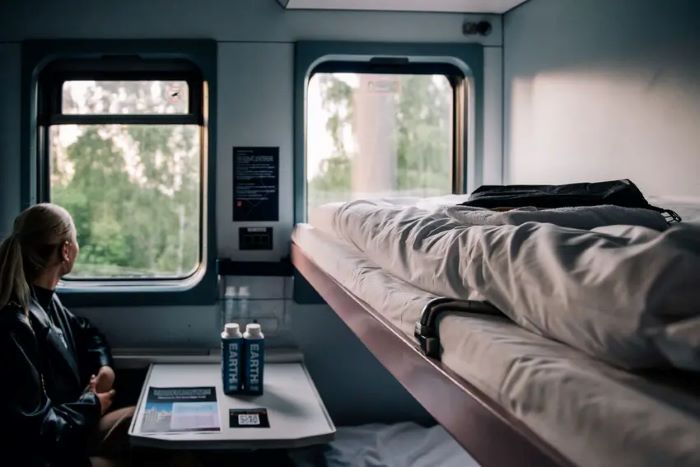
The route will run via Germany and Switzerland, with passengers boarding in Brussels in the evening and arriving in Milan the following morning. Travellers will be able to choose between regular seats, couchettes and private sleeper compartments, a format that has fuelled renewed interest in night trains across the continent.
Officials and rail operators say the new line stands to benefit both Belgium and Italy. For Belgium, the service strengthens Brussels’ role as a transport hub and increases the country’s appeal as a gateway for travellers heading south. For Italy, the overnight link provides a direct connection from northern Europe into one of its busiest commercial centres, opening a smoother path for business travellers, tourists and the growing number of rail enthusiasts choosing low-emission travel.
Economists note that the service could stimulate sectors on both ends of the route. Hotels, restaurants and small businesses in Brussels, Milan and intermediate towns are expected to see increased traffic as overnight rail encourages multi-city journeys. The ability to travel while sleeping removes the need for an extra hotel night, a feature that has proven especially attractive to students, young professionals and families looking for cost-effective options.
Tourism bodies in both countries are already describing the link as a potential boost. Belgium will gain greater visibility among southern European travellers, while Italy’s tourism sector, particularly in Milan and the surrounding Lombardy region, could benefit from easier access for visitors from northern Europe. The route passes through some of the continent’s most scenic corridors, including Alpine landscapes that have become a draw in their own right, adding experiential value to the journey.
Trade ties are also expected to deepen. Milan is a major centre for finance, design and manufacturing, and the new connection will allow business travellers to move between meetings in Belgium and Italy without losing working days to daytime travel. Analysts say this convenience may encourage more frequent in-person contact, a factor that can strengthen commercial relationships.
The service arrives amid a renewed push to revitalise Europe’s night train network. Several European governments have been backing efforts to shift short-haul travel from air to rail in order to cut emissions. Night trains have become central to that strategy, offering lower-carbon travel without requiring passengers to sacrifice time or comfort.
European Sleeper says ticket sales are expected to open early next year. If passenger demand matches projections, the Brussels-Milan service could become a core north-south artery and a model for future connections across the continent. For both Belgium and Italy, the new line is seen not just as a piece of transport infrastructure but as a bridge linking economies, societies and cultures with the rhythm of overnight travel.
Photo – Picture Alliance. dpa/dpa-tmn. Zacharie Scheurer