






Europe’s Drone Anxiety
By early 2026, a troubling pattern has begun to emerge across Europe’s skies. From Belgium to Denmark, from the United Kingdom to Poland, reports of unidentified drones hovering near airports, military bases and other sensitive installations have multiplied. What might once have been dismissed as isolated incidents are now being viewed collectively as part of a wider security concern, feeding a sense of unease across the continent.
Authorities in Belgium have investigated repeated drone incursions over sensitive locations, including air bases and major airports, with some incidents forcing temporary shutdowns and flight disruptions. Denmark has faced similar alerts, where sightings near airports and military facilities led to security warnings and operational delays. Across Europe, the pattern has repeated itself in different forms. In the United Kingdom, authorities have reported a sharp rise in drone sightings near military sites, while in Poland a drone crash inside a military compound led to the detention of its operator. Airports in Germany and the Netherlands have also experienced temporary closures after drones were detected in restricted airspace.
The rise in such incidents reflects several converging factors. The first is the rapid spread of drone technology. Commercial drones are now cheaper, more capable and easier to operate than at any time in the past. Devices that can travel several kilometres, carry cameras or small payloads, and operate with minimal technical skill are widely available. What was once the preserve of military forces is now within reach of hobbyists, criminals and political actors alike.
The second factor is the changing nature of modern conflict. The war in Ukraine has demonstrated how drones can be used not just on the battlefield, but also for reconnaissance, sabotage and psychological pressure. European officials increasingly warn that some drone incursions may be part of what is known as hybrid warfare – activities designed to disrupt, test defences or create fear without triggering open confrontation. Even when no attack occurs, the mere presence of unidentified drones near sensitive sites can force costly shutdowns and generate public anxiety.
There is also the simpler explanation of human behaviour. Not all drone incidents are acts of espionage or aggression. Some are caused by hobbyists or commercial operators who ignore or misunderstand flight restrictions. However, even an accidental drone flight near an airport or military installation can have serious consequences, forcing closures, triggering security alerts and exposing weaknesses in airspace control.
For the average citizen, the risk posed by these incidents remains relatively low. Most sightings do not lead to attacks or casualties, and many are resolved quickly once the operator is identified. Yet the psychological effect is significant. When drones appear over airports, nuclear facilities or military bases, they highlight vulnerabilities in systems that people assume are secure. Even a small device can ground flights, disrupt thousands of travellers and inflict major economic losses.
Unauthorized drones pose several dangers. They can interfere with aviation and create collision risks for aircraft. They can be used for espionage, capturing images or signals from sensitive facilities. In more serious scenarios, drones can carry explosives or electronic warfare equipment. Security experts also warn about the possibility of coordinated drone swarms, which could overwhelm defences or target multiple locations at once. Such tactics have already appeared in modern conflicts, reinforcing fears that similar methods could be used in Europe.
In response, European governments are investing heavily in counter-drone measures. Detection systems using radar, radio-frequency scanning and artificial intelligence are being deployed around sensitive sites. Some countries are expanding legal powers to allow security forces to jam, seize or destroy unauthorized drones. Others are strengthening cooperation through NATO and regional security frameworks, recognising that the threat does not respect national borders. Dedicated counter-drone units are also being formed to respond quickly to incidents near critical infrastructure.
Europe’s growing drone anxiety reflects a broader shift in global security. Cheap, silent and difficult to detect, drones have changed the balance between attackers and defenders. What once required sophisticated weapons or aircraft can now be attempted with devices purchased online. For now, most incidents remain disruptions rather than disasters, but the steady increase in sightings suggests that the drone age has arrived, and Europe, like the rest of the world, is still learning how to live with it. The challenge ahead will not only be stopping the drones that are seen, but preparing for the ones that are not.
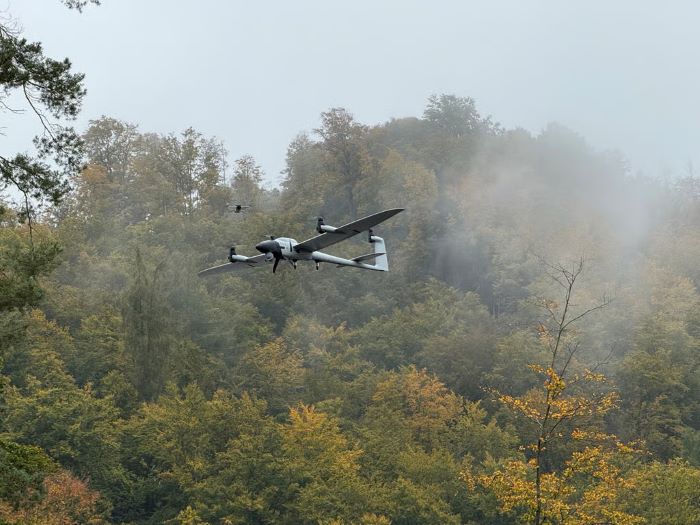
Photo – Unmanned aerial vehicles of unknown origin prompted the closure of airports in Denmark, Norway and Germany. | Michael Bauer/picture alliance via Getty Images